


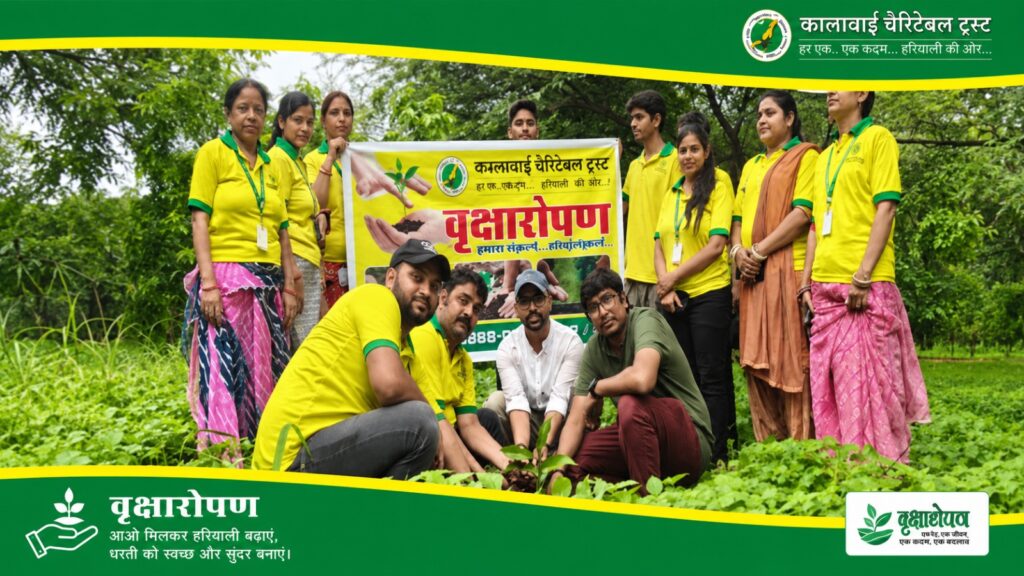
Benefits of Tree Plantation in Jaipur: A Greener Future for the Pink City
Jaipur, the Pink City, is admired for its historic forts, colourful markets, traditional architecture, and vibrant culture. But as the city continues to grow, maintaining a healthy balance between urban development and nature has become increasingly important. Hot summers, traffic, construction, road dust, expanding residential areas, and pressure on green spaces are some of the environmental challenges faced by growing cities. In this situation, increasing and protecting urban greenery can play an important role. One of the simplest community-level actions is tree plantation in Jaipur. Trees can provide shade, support urban biodiversity, improve the appearance of neighbourhoods, contribute to healthier green spaces, and make outdoor areas more comfortable. However, successful planting is not simply about planting as many saplings as possible. Choosing the right species, selecting suitable locations, and caring for trees after planting are equally important. Rajasthan’s forest policy also emphasises expanding vegetation cover through participatory plantation activities and recommends appropriate multipurpose, less-water-demanding and drought-resistant tree species for suitable locations. Let’s look at the major benefits of planting trees in Jaipur and how residents, schools, businesses, and communities can contribute to a greener city.
Benefits of Tree Plantation in Jaipur at a Glance
Benefit | How It Helps Jaipur |
Urban cooling | Trees provide shade and can make outdoor areas more comfortable |
Green spaces | Adds greenery to roads, parks, campuses, and communities |
Biodiversity | Provides habitat and food opportunities for birds and insects |
Air quality | Vegetation can help intercept some airborne particles |
Water management | Supports soil structure and can help slow rainwater movement |
Dust reduction | Vegetation can create buffers in suitable locations |
Outdoor comfort | Makes walking routes and public spaces more pleasant |
Well-being | Provides natural spaces for relaxation and outdoor activities |
Environmental education | Helps students and communities learn about nature |
Sustainability | Supports long-term urban environmental resilience |
1. Helps Reduce the Impact of Urban Heat
Jaipur experiences hot summers, and built-up areas can become particularly uncomfortable when concrete, asphalt, buildings, and parking surfaces absorb and retain heat. Trees provide natural shade and release moisture through transpiration. A healthy tree canopy can make walking routes, parks, residential areas, and other outdoor spaces more comfortable. Planting trees in appropriate locations around communities, schools, parks, and public spaces can therefore contribute to a more comfortable urban environment. The goal should not be simply to plant trees everywhere, but to create well-planned urban greenery where trees can grow safely and provide long-term benefits.
2. Supports a Healthier Urban Environment
Urban air quality can be influenced by traffic, construction, road dust, and other activities. Trees cannot replace pollution-control measures, but vegetation can support a healthier environment. Leaves and branches can intercept certain airborne particles, while trees absorb carbon dioxide during photosynthesis. For Jaipur, tree plantation should therefore be considered alongside cleaner transportation, construction dust management, waste management, and other environmental measures. A combination of these approaches is more effective than relying on plantation alone.
3. Creates More Livable Neighbourhoods
Green neighbourhoods can feel more comfortable and welcoming than areas dominated by concrete. Trees can be planted in appropriate spaces around:-
- Residential communities
- Parks and gardens
- School and college campuses
- Walking paths
- Community centres
- Suitable roadside areas
- Institutional premises
Well-planned greenery can improve the visual character of an area while creating more opportunities for residents to connect with nature. For a rapidly developing city like Jaipur, maintaining this balance between development and green spaces is increasingly important.
4. Supports Birds, Bees, Butterflies, and Biodiversity
Urbanisation can reduce natural habitats for birds, insects, and other wildlife. Trees can provide shelter, nesting opportunities, food, and resting places for different forms of urban biodiversity. Flowering and fruit-bearing plants can also support birds, bees, butterflies, and other beneficial organisms. This is why a successful tree plantation drive in Jaipur should focus on more than the number of saplings planted. Before planting, organisers should consider:-
- Local climate
- Soil conditions
- Water availability
- Available planting space
- Surrounding infrastructure
- Future tree growth
- Long-term maintenance
The objective should be to create healthy, sustainable greenery rather than temporary plantation numbers. Rajasthan’s forestry programmes also identify increasing green cover and improving biodiversity as important objectives of plantation and regeneration activities.
5. Can Help Reduce the Impact of Roadside Dust
Jaipur’s dry climate and busy urban areas can contribute to dusty surroundings, especially near roads and construction sites. Trees and shrubs can act as vegetation buffers in suitable locations. They can create a natural separation between roads and nearby public or residential spaces while improving the appearance of the surroundings. Roadside plantation is also recognised within Rajasthan’s forest policy as an appropriate use of available linear spaces, subject to space and site conditions. However, vegetation should be part of a broader dust-management strategy that includes proper road maintenance, construction-site controls, and responsible urban planning.
6. Provides Shade for People
Shade is one of the most noticeable benefits of mature trees. In Jaipur’s hot climate, shaded walking paths, parks, school grounds, community spaces, and residential streets can make outdoor activities more comfortable. A tree planted today may take years to become mature, which is why plantation should be viewed as a long-term investment. Instead of asking only, “How many trees did we plant?”, communities should also ask: “How many trees will still be healthy five or ten years from now?” That shift in thinking can make plantation programmes much more meaningful.
7. Supports Rainwater and Soil Management
Trees and vegetation can contribute to better soil and water management. Tree roots can help improve soil structure, while canopies can intercept some rainfall and slow the movement of water toward the ground. Trees alone cannot solve drainage problems or water shortages. However, combining green spaces with rainwater harvesting, permeable surfaces, soil conservation, and appropriate drainage can support more sustainable urban development. For a city dealing with hot and relatively dry conditions, considering water requirements before plantation is particularly important. Rajasthan’s forestry programmes also connect soil and moisture conservation with improving degraded areas and supporting vegetation growth.
8. Makes Jaipur's Public Spaces More Attractive
Trees can transform the appearance and experience of an urban space. A tree-lined walking route, greener community park, or shaded institutional campus can feel more inviting than a completely built-up area. For Jaipur, greenery can also complement the city’s historic character. A balance between heritage, modern infrastructure, and natural landscapes can help create a more attractive urban environment. Green public spaces can encourage walking, outdoor activities, family time, and community interaction.
9. Supports Mental Well-Being and Outdoor Activities
Green surroundings can provide people with places to walk, relax, exercise, and spend time outdoors. Parks and tree-covered spaces can offer a break from busy roads and crowded urban environments. For children, families, and older adults, accessible green areas can become valuable parts of everyday life. The benefits of trees therefore go beyond environmental improvement. They can contribute to the overall experience of living in a city.
10. Builds Environmental Awareness
A plantation activity can become a powerful educational experience when communities continue caring for trees after planting. Schools can involve students in:-
- Tree planting
- Watering and care
- Identifying local species
- Learning about biodiversity
- Monitoring tree growth
- Understanding water conservation
Rajasthan’s forest policy specifically encourages plantation on suitable educational and institutional land with the involvement of students, teachers, and community members. Similarly, resident associations, colleges, businesses, and community groups can organise long-term tree-care programmes. The most valuable plantation drive is not necessarily the largest one. It is the one where people continue to care about the trees after the event ends.
Choosing the Right Tree for Jaipur
Planting the right tree in the right location is essential. Jaipur’s climate, soil, water availability, available space, and surrounding infrastructure should all be considered before selecting a species.
Right Tree, Right Place
| Factor | What to Consider |
| Water | Can the location support the tree’s long-term water needs? |
| Soil | Is the soil suitable for healthy root development? |
| Space | Is there enough room for future roots and branches? |
| Sunlight | Will the tree receive appropriate sunlight? |
| Infrastructure | Could roots or branches interfere with buildings or utilities? |
| Maintenance | Who will water, protect, and monitor the tree? |
| Local suitability | Is the species appropriate for the local climate and conditions? |
Rajasthan’s forest policy recommends considering multipurpose species that are suitable for local conditions and less demanding of water. It lists species such as Neem, Shisham, Siras, Amla, Karanj, Churel, Banyan, and Peepal among examples for appropriate plantation contexts. However, there is no single best tree for Jaipur for every situation. Species selection should be based on the actual planting site and, where needed, guidance from local forestry or horticulture professionals.
How to Plan a Successful Tree Plantation Drive in Jaipur
A good plantation programme should have a plan before the first sapling goes into the ground.
Before Plantation
- Identify suitable planting locations.
- Check soil and water conditions.
- Select appropriate species.
- Check available space for future growth.
- Identify nearby buildings, roads, utilities, and power infrastructure.
- Arrange watering and protection requirements.
During Plantation
- Prepare the planting area properly.
- Handle saplings carefully.
- Plant according to appropriate local practices.
- Provide initial watering.
- Install protection where necessary.
- Record the location and number of planted trees.
After Plantation
- Water young trees according to their needs.
- Protect saplings from accidental damage.
- Monitor growth and plant health.
- Maintain soil and mulch where appropriate.
- Replace trees that fail to establish.
- Track survival over time.
The Rajasthan Forest Department maintains dedicated plantation information for multiple Jaipur units, including Jaipur North, Jaipur South, and Jaipur Zoo areas, showing the role of organised plantation planning and monitoring. The department also maintains nursery information and a citizen-facing plant-search system, reinforcing the importance of quality planting material and planned plantation.
Plantation vs. Long-Term Tree Care
Plantation day is only the beginning.
Plantation Activity | Long-Term Tree Care |
Select a location | Monitor the tree regularly |
Plant the sapling | Provide appropriate watering |
Add protection | Repair or maintain protection |
Record plantation numbers | Track survival |
Complete the campaign | Continue maintenance |
Take the first step | Help the tree become established |
This is why tree plantation in Jaipur should be viewed as a long-term environmental commitment rather than a one-day campaign.
How Residents Can Help Make Jaipur Greener
You don’t need to organise a large event to make a difference. Residents can plant and care for suitable trees where permitted. Schools can develop small green areas. Housing societies can create tree-care programmes. Businesses can maintain greenery around appropriate premises or support community initiatives. There is another important action that is sometimes overlooked: protect existing mature trees. Planting new trees is valuable, but keeping healthy existing trees alive can also be an important part of urban greenery. A greener Jaipur requires both new plantation and responsible protection of existing vegetation.
Conclusion
A Greener Jaipur Starts With Us
The benefits of tree plantation in Jaipur go far beyond adding greenery to streets and public spaces. Trees can provide shade, support biodiversity, improve the character of neighbourhoods, contribute to healthier urban ecosystems, and create more pleasant spaces for people. But successful planting is not about planting a large number of saplings and leaving them behind. It is about choosing the right tree, right place, right care, and right commitment. If residents, schools, businesses, community groups, and environmental organisations work together, Jaipur can gradually become greener, more comfortable, and more resilient.
Take Action for a Greener Jaipur
Ready to contribute?
Plant a suitable tree. Protect an existing one. Help your community care for its greenery. If you are a school, business, resident group, NGO, or community organisation, consider organising a plantation activity that includes a long-term maintenance plan. Because a greener Jaipur is not created in one day. It grows—one well-planted and well-cared-for tree at a time.
The major benefits include shade, improved green spaces, support for biodiversity, more comfortable outdoor areas, contribution to soil and rainwater management, and greater environmental awareness.
Jaipur faces hot summers, urban expansion, traffic, construction activity, and pressure on green spaces. Suitable and well-maintained tree cover can contribute to a healthier and more sustainable urban environment.
Suitable species depend on the location, soil, water availability, available space, and purpose of plantation. Native or regionally adapted species can be considered where appropriate with local expert guidance.
No. Trees can support a healthier environment, but they cannot replace pollution-control measures. Cleaner transportation, dust control, waste management, and sustainable urban planning are also important.
Schools can organise plantation activities, create biodiversity areas, involve students in tree care, and teach lessons about biodiversity, soil, water conservation, and environmental responsibility.
Both are important, but long-term maintenance is essential. A plantation programme becomes more successful when planted saplings are protected, watered, monitored, and cared for until they become established.