


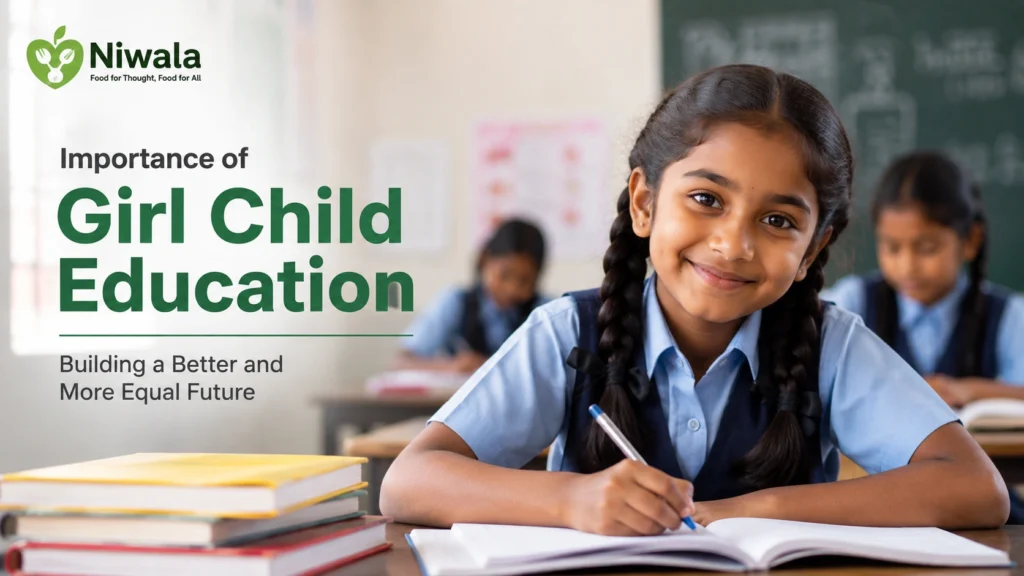
Importance of Girl Child Education: Building a Better and More Equal Future
Education can change the direction of a child’s life. For girls, having access to quality education can mean much more than learning subjects at school. It can help them build confidence, develop useful skills, discover career opportunities, and make informed decisions about their future. Yet, many girls still face barriers that can make it difficult to start, continue, or complete their education. Poverty, social expectations, safety concerns, household responsibilities, distance from school, and limited access to learning resources can all affect educational opportunities. That is why girl child education matters. When girls have the opportunity to learn in a safe and supportive environment, the benefits can reach beyond the individual child and positively influence families, communities, and society.
Why Is Girl Child Education Important?
The importance of girl child education goes far beyond classroom learning. Education can help girls develop communication, problem-solving, critical thinking, leadership, and decision-making skills. It can also give them greater confidence to express their ideas, explore their interests, and plan for their future. UNICEF describes investment in girls’ education as a powerful way to strengthen families, communities, economies, and societies. An educated girl can also become a positive influence on the people around her. Her knowledge and experiences can help inspire younger siblings, friends, classmates, and eventually the next generation.
1. Education Builds Confidence and Independence
2. Girls' Education Creates Better Career Opportunities
3. Educated Girls Can Strengthen Families
The benefits of education do not stop with the student. Girls who receive a good education can develop knowledge and skills that may help them make informed decisions about finances, health, parenting, nutrition, and their children’s education later in life. This creates a positive ripple effect. Supporting one girl’s education today can potentially influence the opportunities available to her family and future generations. UNESCO similarly highlights the transformative effects of girls’ and women’s education on individuals, families, communities, and society.
4. Education Helps Reduce Gender Inequality
5. Girl Child Education Supports Economic Growth
Education helps people develop knowledge and skills that can contribute to the workforce and wider economy.
When girls receive opportunities to complete their education and develop professional skills, more talent can participate in employment, entrepreneurship, innovation, and community development. UNICEF notes that girls’ education can strengthen economies and contribute to reducing inequality.
Supporting girls’ education is therefore not only a social responsibility. It is also a long-term investment in human potential.
6. Education Improves Awareness of Rights and Opportunities
7. Education Encourages Leadership
8. Education Can Help Break the Cycle of Poverty
For some families, financial difficulties can make education difficult to access or continue. At the same time, limited education can reduce future employment and earning opportunities. Supporting girls’ education can help address this cycle by giving them knowledge and skills that can open new possibilities. Scholarships, school supplies, transportation assistance, digital learning resources, and community education programs can help reduce some of the practical barriers families face.
9. Education Promotes Health and Wellbeing
10. Educated Girls Can Inspire Future Generations
Major Challenges to Girl Child Education
Although many communities have made progress, girls can still face challenges that affect their education. Some common barriers include:-
- Household financial difficulties
- Social and cultural barriers
- Child marriage
- Lack of safe transportation
- Long distance from school
- Inadequate sanitation facilities
- Safety concerns
- Limited access to digital devices or internet
- Household responsibilities
- Limited awareness of educational opportunities
- Lack of learning resources
These challenges are often connected. For example, financial pressure can increase household responsibilities, while distance or safety concerns can make regular school attendance difficult. UNICEF identifies poverty, child marriage, gender-based violence, safety and sanitation concerns, and other social barriers among factors that can affect girls’ access to education.
How Can We Support Girl Child Education?
Improving girls’ education is not the responsibility of one group alone. Parents, teachers, communities, organizations, and individuals can all contribute.
Parents and Families:- Families can encourage girls to stay in school, support their educational goals, and treat education as equally important for both girls and boys.
Schools and Teachers:- Schools can create safe, inclusive, and supportive learning environments. Teachers can encourage girls to participate in discussions, sports, technology, STEM subjects, leadership activities, and other learning opportunities.
Communities:- Communities can raise awareness, support scholarships, provide educational resources, and help families understand the long-term value of girls’ education.
Individuals and Donors:- Individuals can support credible education organizations, donate learning materials, sponsor educational initiatives, or volunteer their time and skills. Even a small contribution can become meaningful when many people work toward the same goal.
The Role of Technology in Girls' Education
Girl Child Education in India
What Can We Do Today?
Supporting girl child education does not always require a large contribution. There are many simple ways to help:-
- Encourage a girl to continue her education.
- Donate books, school supplies, or learning resources.
- Support credible education-focused organizations.
- Share information about scholarships and educational opportunities.
- Volunteer with community education programs.
- Promote equal educational opportunities for girls and boys.
- Encourage digital literacy and access to technology.
- Speak positively about girls’ education within your community.
Sometimes, the most important thing we can give a child is encouragement—the feeling that her education matters and that her dreams are worth pursuing.
Creating Long-Term Change Through Education
Girl child education is not simply about getting girls into classrooms. It is about helping them learn, grow, participate, and build meaningful futures.
A quality education can give girls the confidence to ask questions, the skills to solve problems, and the knowledge to make informed choices.
That is why efforts to improve girls’ education should focus on both access and quality. Girls need opportunities to attend school, but they also need safe environments, supportive teachers, useful learning experiences, and encouragement to continue their education.
When those pieces come together, education can become a powerful foundation for long-term change.
Conclusion
Give a Girl the Opportunity to Learn
If you or your organization wants to support educational opportunities for girls, consider partnering with a credible local education or community-development organization. You can help through volunteering, donating learning resources, supporting scholarships, or simply spreading awareness about the importance of girls’ education. Because every girl deserves a chance to learn, grow, and achieve her dreams.