


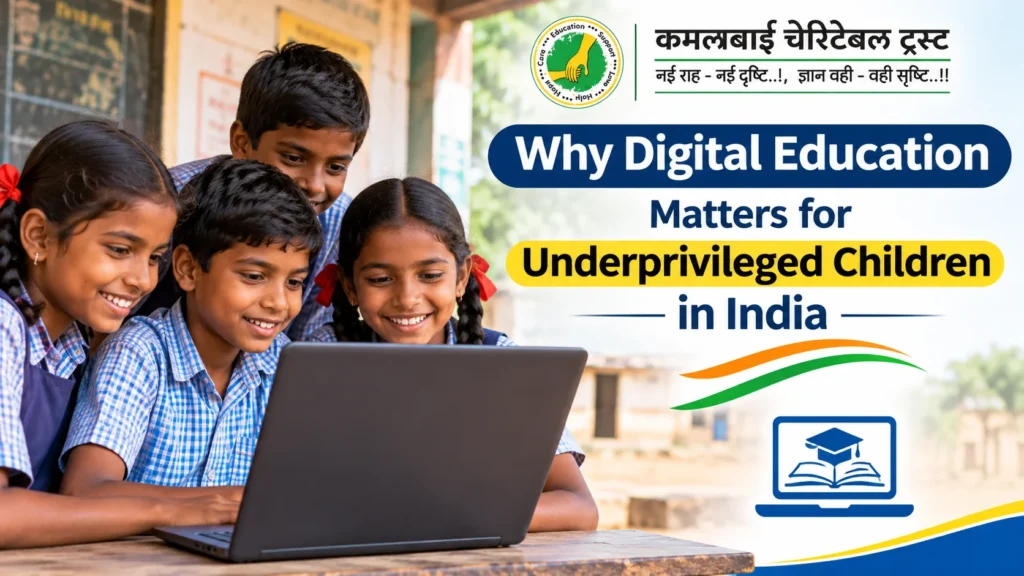
Why Digital Education Matters for Underprivileged Children in India
Education has the power to change lives. It helps children develop knowledge, build confidence, discover their abilities, and create opportunities for a better future. Yet, access to quality education remains unequal across India, particularly for children from economically disadvantaged families. While many students have access to computers, smartphones, online classes, and digital learning platforms, others continue to face challenges such as limited educational resources, inadequate infrastructure, and restricted learning opportunities.
This is where digital education for underprivileged children in India becomes particularly important. By making educational resources more accessible, technology can help children overcome some of the barriers that prevent them from learning and developing essential skills. Digital education is not simply about introducing computers into classrooms. It is about creating inclusive learning opportunities where every child, regardless of their financial circumstances or geographical location, has the chance to learn, grow, and succeed.
What Is Digital Education?
Digital education refers to the use of technology to support teaching and learning. It combines traditional educational methods with digital resources to make learning more flexible, interactive, and accessible.
Digital education can include:
- Online classes and virtual classrooms
- Educational videos and interactive lessons
- Digital textbooks and study materials
- Learning applications and educational websites
- Computer-based learning programs
- Offline digital educational resources
- Educational television and broadcast learning
These resources can help students understand difficult concepts, explore new subjects, and develop skills beyond traditional classroom lessons. For underprivileged children, digital learning can provide additional educational opportunities when suitable devices, connectivity, and guidance are available.
Why Digital Education Matters for Underprivileged Children in India
1. It Helps Reduce Educational Inequality
Children from financially secure families may have access to private tuition, computers, educational books, and additional academic support. However, children from economically weaker families may depend primarily on the resources available at their schools. This difference can create educational inequality that affects children’s academic progress and future opportunities. Digital education can help reduce some of these disparities by providing access to educational videos, practice exercises, digital textbooks, and supplementary learning materials. Although technology cannot eliminate educational inequality on its own, it can become an important tool for creating more equal learning opportunities.
2. It Makes Educational Resources More Accessible
Access to quality educational resources is essential for academic development. Unfortunately, children in underserved communities may have limited access to libraries, specialized teachers, or additional learning materials. Digital learning platforms can help students access educational resources beyond their immediate surroundings. For example, students may use digital learning materials to:-
- Understand mathematics and science concepts
- Improve reading and writing skills
- Practice English and other languages
- Explore computer science and technology
- Access educational videos and tutorials
- Prepare for school examinations
When educational content is affordable, accessible, and available in familiar languages, digital education can support children who have fewer educational resources at home.
3. It Supports Children in Rural and Underserved Communities
Children living in rural and remote areas may experience educational challenges related to school infrastructure, teacher availability, transportation, and access to learning materials. Digital education in India can help connect these children with educational resources that might otherwise be difficult to access. Online lessons, educational videos, and digital textbooks can supplement classroom learning and provide additional academic support. However, digital education must be supported by reliable electricity, internet connectivity, affordable devices, and trained teachers. A combination of traditional schooling, community learning centres, and digital learning resources can help create more inclusive educational opportunities for children in underserved areas.
4. It Encourages Self-Paced Learning
5. It Develops Essential Digital Literacy Skills
modern digital tools. These skills can also support their participation in higher education and future employment opportunities.Digital literacy is becoming increasingly important in education, employment, communication, and everyday life. Children need to learn how to use technology responsibly, search for information, communicate online, and understand basic digital tools. Digital education can introduce children to important skills such as:-
- Basic computer operations
- Typing and document creation
- Internet research
- Educational software
- Online communication
- Digital safety and privacy
- Responsible technology use
For underprivileged children, access to digital literacy education can help reduce the technology gap and build confidence in using
6. It Creates Opportunities for Future Careers
Technology is increasingly used across industries, including healthcare, education, business, communication, and manufacturing. Digital skills for children can help prepare them for future educational and professional opportunities. Early exposure to digital learning may introduce students to subjects such as:-
- Coding and programming
- Graphic design
- Computer applications
- Data analysis
- Digital communication
- Basic technical skills
These learning experiences can help children discover their interests and explore career possibilities. Digital education does not guarantee employment or financial success, but it can help children develop useful skills and become better prepared for an increasingly technology-driven world.
7. It Makes Learning More Interactive and Engaging
Children often find it easier to understand certain concepts when lessons include visual examples and interactive activities. Digital educational resources can use animations, videos, quizzes, simulations, and educational games to explain complex topics. For example, an interactive science lesson can help students understand the solar system, human anatomy, or environmental processes more clearly. These learning methods can encourage curiosity, improve participation, and make education more engaging. However, digital learning tools should complement classroom teaching rather than replace teachers or meaningful human interaction.
8. It Supports Girls' Education and Inclusive Learning
Girls from economically disadvantaged families may face additional barriers to education, including household responsibilities, financial limitations, and restricted access to learning resources. Digital education can provide additional learning opportunities through community learning centres, supervised digital classrooms, and accessible educational platforms. It can also support children with disabilities when educational resources include appropriate accessibility features, such as captions, screen-reader compatibility, and adaptable learning materials. For digital education to benefit everyone, children must have equal access to devices, safe learning environments, and supportive guidance.
Major Challenges in Digital Education for Underprivileged Children
Although digital education offers many opportunities, several challenges must be addressed to ensure that children from disadvantaged backgrounds can benefit equally.
Limited Access to Digital Devices:- Many families cannot afford smartphones, tablets, or computers for educational purposes. In some households, children must share a single device with parents or siblings. This can make attending online classes and completing assignments difficult. Affordable devices, shared computer facilities, and community learning centres can help address this challenge.
Poor Internet Connectivity:- Reliable internet connectivity remains an important requirement for many digital learning platforms. Children in remote or underserved areas may experience slow internet speeds, frequent interruptions, or limited connectivity. Offline educational content, downloadable lessons, and television-based learning can help students continue learning when internet access is unavailable.
Lack of Digital Literacy:- Some children, parents, and teachers may have limited experience using digital devices and educational platforms. Without proper guidance, students may struggle to access learning materials or use educational applications effectively. Digital literacy workshops and teacher training can help make technology easier to use.
Language Barriers:- Educational content may not always be available in languages that children understand comfortably. Students who primarily speak Hindi or regional languages may find English-based learning platforms difficult to navigate. Providing educational resources in Hindi and other Indian languages can make digital education more inclusive.
Online Safety and Digital Distractions:- Children using digital platforms may encounter inappropriate content, cyberbullying, online scams, privacy risks, or excessive screen time. Digital education should therefore include age-appropriate supervision, online safety awareness, and responsible technology use. Children need safe digital environments where they can learn without compromising their privacy or well-being.
How NGOs and Communities Can Promote Digital Education
Non-governmental organizations (NGOs), educational institutions, local communities, and responsible businesses can contribute to improving access to digital education for underprivileged children.
Establish Community Digital Learning Centres
Provide Affordable or Refurbished Devices
Donating functional computers, tablets, and smartphones can help students access digital educational resources. However, device distribution should also include basic training, suitable educational content, maintenance support, and guidance on responsible technology use.
Organize Digital Literacy Workshops
Collaborate With Schools and Teachers
Promote Offline Educational Resources
How KBCT Can Help Support Educational Opportunities
Creating equal educational opportunities requires collective effort from individuals, charitable organizations, educational institutions, and communities. Organizations such as Kamlabai Charitable Trust (KBCT) can contribute to broader community development by encouraging educational support, raising awareness about social inequality, and helping connect communities with meaningful charitable initiatives. For children from economically disadvantaged backgrounds, access to education can create opportunities for personal development, confidence, and a better future. Supporting educational initiatives is one way individuals and organizations can contribute to a more inclusive society.
At KBCT, community support and charitable participation can help create a stronger foundation for children and families facing social and economic challenges.
If you would like to support charitable initiatives and contribute to community welfare, explore the relevant programs and donation opportunities available through KBCT.
The Future of Digital Education in India
The future of digital education in India depends on making technology accessible, affordable, inclusive, and meaningful for every child. As educational technology continues to evolve, tools such as artificial intelligence, interactive learning platforms, and personalized educational resources may create new ways to support students. However, technology should remain a learning tool rather than a replacement for teachers, schools, or human interaction. The most effective approach combines digital learning resources with classroom teaching, community support, and personal guidance. India’s progress toward inclusive education will depend on ensuring that children from disadvantaged backgrounds are not left behind as learning environments become increasingly digital.
Conclusion
Digital education for underprivileged children in India has the potential to create meaningful opportunities for learning, skill development, and personal growth. By improving access to educational resources, developing digital literacy, supporting self-paced learning, and introducing children to future career possibilities, technology can contribute to a more inclusive education system. However, achieving these benefits requires more than providing digital devices. Children also need reliable connectivity, accessible educational content, trained teachers, safe learning environments, and ongoing support. Every child deserves the opportunity to learn, regardless of their family’s financial circumstances or geographical location. By working together, schools, communities, NGOs, and policymakers can help make digital education a powerful tool for reducing educational inequality and building a brighter future for India’s children.